



Station Stays in the Golden Outback
- Blog
- Station Stays in the Golden Outback
The station stays of the Golden Outback offer an immersive experience like no other. Carolyn Beasley, Freelance Travel and Environment Writer shares her Station Stay experience with us.
‘The Outback Starts Here,’ the sign proclaims, and proving the point, a red kangaroo soars over a fence and is swallowed by mulga bushland. Together with my family, I’m on a five-day road trip through Australia’s Golden Outback, visiting a number of traditional Western Australian station stays in the Gascoyne Murchison that provide immersive experiences, and a connection to the people who call the outback home.
Mellenbye Station
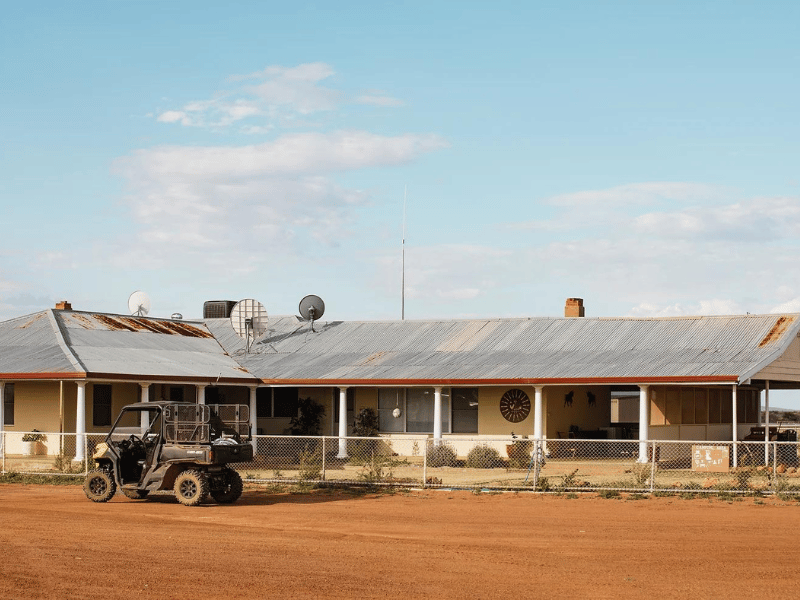
Our first stop is Mellenbye Station, some 400 kilometres north of Perth. Manager Shelly Bogdan has restored the historic homestead, which now includes guest rooms, and the old shearing shed is home to a camp kitchen, dance floor, games and even a mechanical bull (yep, it’s delightfully quirky).
Accommodation includes camping, shearer’s quarters and dongas, but we’ve booked a smart new cottage. With the sky losing its final glow and squabbling galahs on the fence calling a truce, our personal fire pit crackles to life. The stars are impossibly bright, and a giant meteor hurtles towards earth, a stream of light behind it glowing an otherworldly blue.
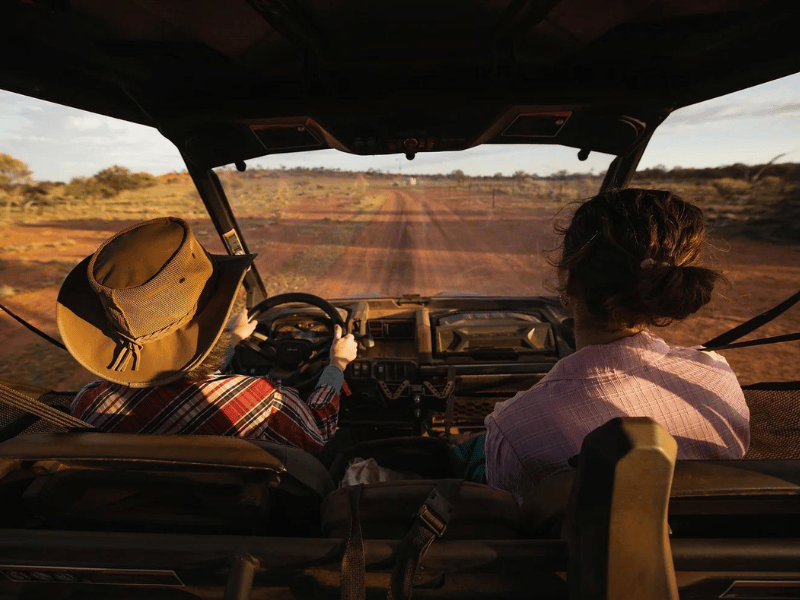
Highlights here include meeting the pet donkeys and goats, or a visit the station’s granite outcrop for orchids and emus. Shelly says there’s also a place called Breakaway Country. The name inspires me, and we follow Shelly’s farm buggy for 13 kilometres, past the cattle, and paddocks that will later be thick with wildflowers. From a small cliff, we gaze towards a dry lake, and see the salty creek that feeds it during northern cyclones. Over centuries, mighty boulders and chunks of river bank have tumbled towards the creek, these ‘breakaways’ exposing red, white and pink sediments.
Mount Augustus Station
Sunrise finds us departing for Mount Augustus. This mighty rock attracts various superlatives, like the world’s biggest monolith, the world’s biggest monocline and more accurately, an inselberg. Whatever the case, Mount Augustus (Burringurrah in local Wajarri language), is spectacular, remote, and worth the dusty journey.
The rock sits inside a small national park, bordered by Mount Augustus Station, which operates Mount Augustus Tourist Park. Campers here set up around circles of lush grass with shared fire-pits, and we grab basic supplies and fuel here, too. After setting up, we rush out to catch the sunset from Emu Hill Lookout, the perfect place to photograph the rock changing from brown to a fiery red.
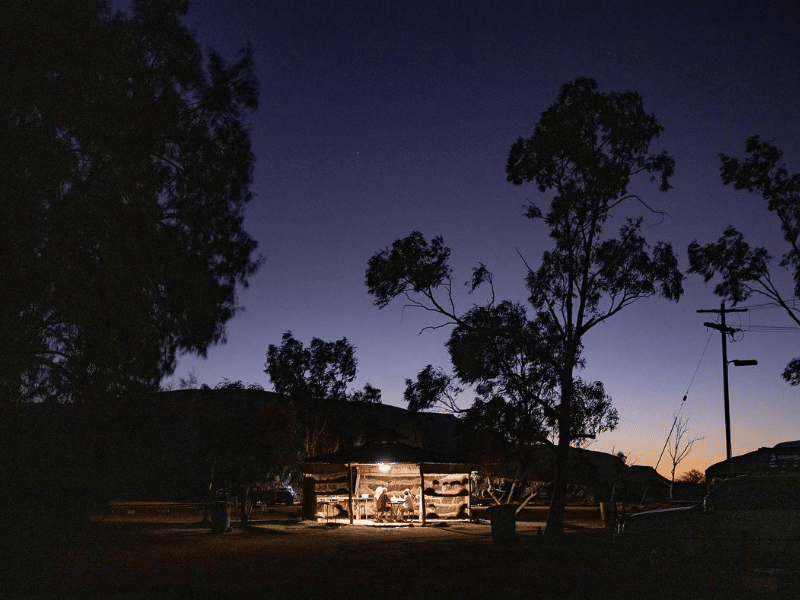
Mount Augustus Station
We’re up early making sandwiches, preparing for the 12-kilometre return hike up Mount Augustus. The Summit Trail offers little shade, and although we’re hiking in winter, we’re glad we’ve brought ample water (tip: do not attempt this in hot weather and ensure you’re fully prepared with water and essentials. This is a serious hike). Carefully, we follow the markers at ground level that indicate the trail.
Puffing at the top, we’re elated with the view. We see the station below, and trees delineating the Lyons River, snaking across plain. Descending via the steep, knee-testing Gully Trail, we clamber over large boulders and down dry watercourses.
After recuperating, we tour the base of the rock, feeling privileged to see the ancient Indigenous rock carvings (petroglyphs) that give the place a spiritual atmosphere.
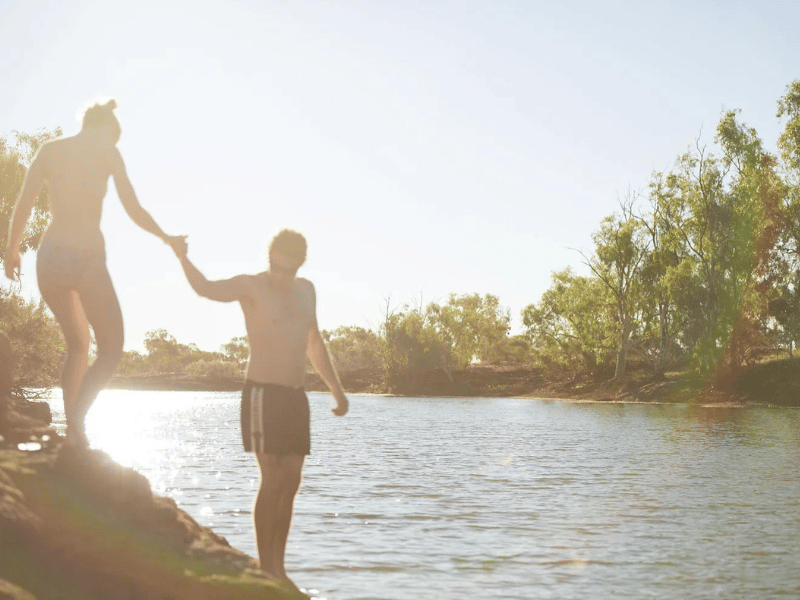
Finally, we take a cooling swim in Cattle Pool (Goolinee). A spinifex pigeon whistles by as I float, and I gaze up through a frame of river red gums, a window to a darkening sky. I realise our station adventure has been a window too, allowing insights into real outback life, with all of its challenges and wonders.
Melangata Station Stay - 68 kilometres north of Yalgoo. The main drawcard is the grand homestead, designed by the priest and architect, Monsignor John Hawes with tours offered. Book a room with dinner, bed and breakfast, or camp, or sleep in an elegant bell tent. It’s a wildflower hotspot in season, and tag-along tours are available.
Nalbarra Station – 98 kilometres north of Paynes Find. Accommodation is in the shearers’ quarters, with most rooms having 24-hour power. Camping sites are available with a communal fire pit and camp kitchen. Go bird-watching, play tennis or take in the wildflowers mid-July to September, phone ahead to learn about wildflowers in bloom or to book a cooked meal.